
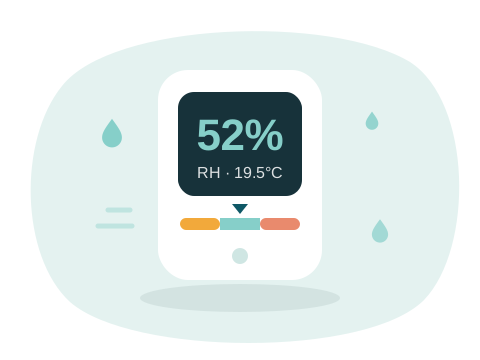
What is the ideal humidity in a house in the UK?
The humidity level to aim for in a UK home, what's too high or too low, how it changes room by room and season by season, and how to measure it properly.
Practical ways to bring room humidity down in a UK home — free habits first, then low-cost fixes, then when a dehumidifier is worth it.

Affiliate links: this guide contains Amazon links marked “paid link”. If you buy through them, Humidity Helper may earn a small commission at no extra cost to you. It never changes what we recommend. Read our disclosure.
Cut moisture at the source (lids on pans, extractor fans on, washing dried in one ventilated room), ventilate briefly and often, keep rooms at a steady moderate temperature, and let air circulate behind furniture. If a room still sits above 60% most days, a dehumidifier is the most reliable way to bring it down.
If your hygrometer is regularly reading above 60%, or the windows are wet every morning, the room is holding more moisture than it can handle. The fix is almost always a combination of making less moisture, getting rid of it faster, and giving it fewer cold places to settle.
Here’s what works, roughly in order of cost — starting with free.
Breathing, cooking, showers and drying laundry all add water vapour to the air — GOV.UK guidance describes this moisture from normal activities building up indoors. In a busy home it adds up to litres a day, so cutting it at the source is the cheapest win.
Condensation forms on cold surfaces. Make them warmer, or let air reach them:
If you’ve worked through the list and the room still sits above about 60% most days — or there’s condensation every morning — the moisture load is more than ventilation can cope with. That’s when a dehumidifier earns its keep.
For a wardrobe, cupboard or small enclosed space, a moisture absorber may be all you need — here’s how moisture absorbers compare with dehumidifiers.
If the damp patch is in one spot, gets worse after rain, has a tide mark low on the wall, or appears in a room you rarely use, the cause may be a leak, a gutter problem or rising or penetrating damp rather than humidity — see how to tell condensation from damp. Those need fixing at source — a dehumidifier will only mask them. If you rent, report it to your landlord in writing.
Reduce the moisture you create (lids on pans, shorter showers, fans on), open windows for 10–15 minutes a couple of times a day, keep the room moderately heated, keep doors closed when cooking or showering, and move furniture slightly away from outside walls. For a small, enclosed space, moisture absorbers can also help.
Yes, usually. Cold outdoor air holds little moisture, so when it comes in and warms up its relative humidity falls. Short, wide openings — 10 to 15 minutes — swap the air without losing too much heat from walls and furniture.
A little. A few plants make little difference, but a large collection in a small, poorly ventilated room can add noticeable moisture. Watering less and grouping them in a bright, ventilated room helps.
Only a tiny amount. They can absorb a little moisture in a sealed box or cupboard, but they won't make a measurable difference to a room. A proper moisture absorber or dehumidifier is far more effective.
Ventilating can drop humidity within minutes, but it climbs back if the source remains. A dehumidifier in a closed room typically brings humidity down noticeably within a few hours and keeps it there.
The humidity level to aim for in a UK home, what's too high or too low, how it changes room by room and season by season, and how to measure it properly.

The clear signs your home is too humid — from streaming windows to musty wardrobes — how to confirm it with a hygrometer, and when a dehumidifier isn't the answer.

How moisture absorbers, rechargeable silica units and mini and full-size dehumidifiers compare on capacity, cost and where they work — and which suits your problem.