

Do dehumidifiers help with mould? What they can and can’t do
How a dehumidifier helps stop mould coming back, why it won't remove existing mould, and the right order to clean, dry and prevent it in a UK home.
How to tell condensation from rising damp, penetrating damp and leaks in a UK home — the signs of each, what fixes them, and when you need a landlord or a surveyor.
Condensation shows up on cold surfaces — windows, outside-wall corners, behind furniture — is worse in winter and in the morning, and often comes with black mould spots. Penetrating damp is a patch that grows after rain; leaks stain near pipes or under bathrooms; rising damp leaves a tide mark low on ground-floor walls. A dehumidifier helps with condensation only — the others need the cause fixing.
“Damp” covers several very different problems. GOV.UK guidance describes condensation as one of the most common causes of damp and mould in homes — but it isn’t the only one. Getting the diagnosis right matters: condensation is usually fixed with ventilation, heating and a dehumidifier, while leaks, penetrating damp and rising damp need a repair. Buy a dehumidifier for the wrong problem and you’ll spend money while the real cause gets worse.
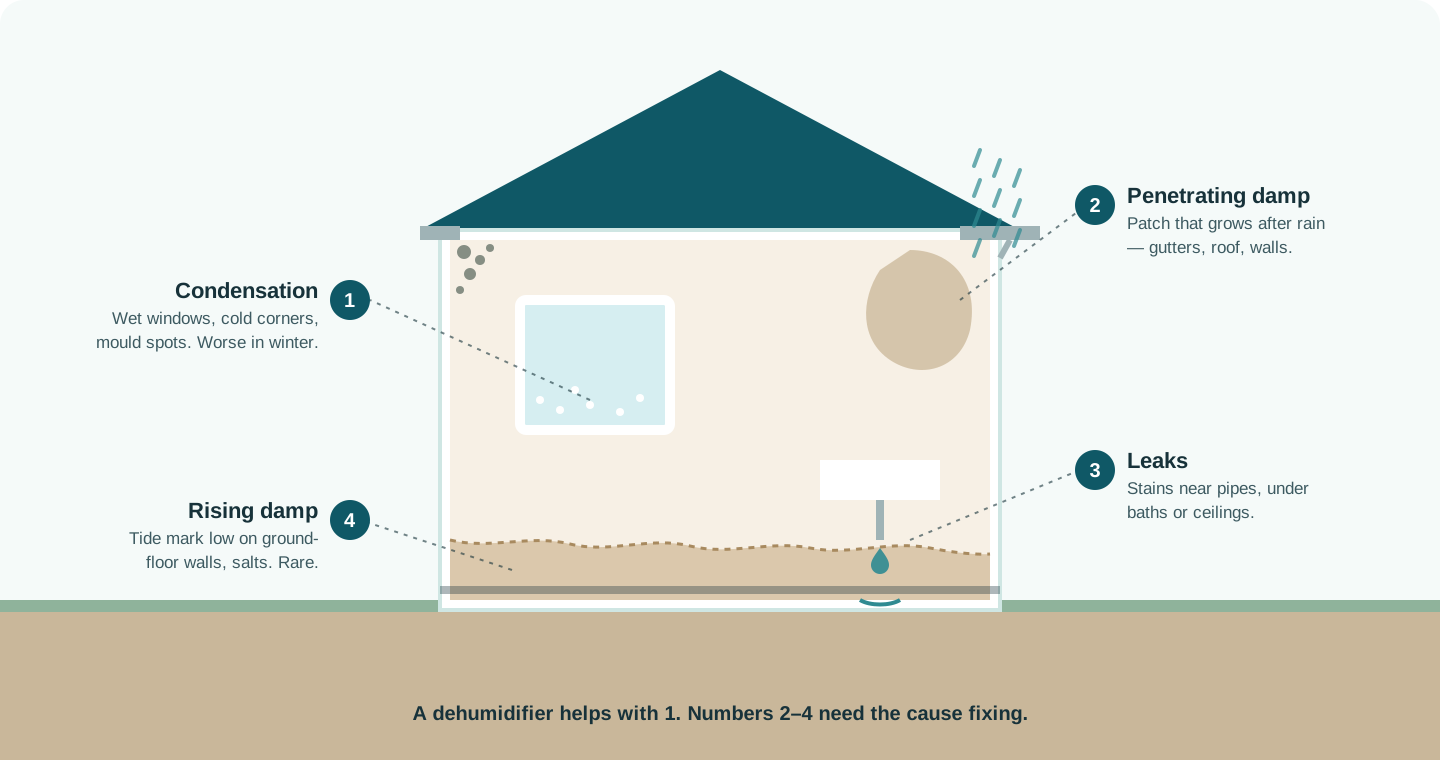
| Condensation | Penetrating damp | Leaks | Rising damp | |
|---|---|---|---|---|
| Where | Windows, cold corners, outside walls, behind furniture, bathrooms | Any height on outside walls, ceilings, around windows and chimneys | Near pipes, under baths and showers, ceilings below bathrooms | Lower part of ground-floor walls only |
| When | Worse in winter and mornings; after showers, cooking, laundry | After rain or wind-driven rain | Constant, or when water is used | All year, little change with weather |
| Typical signs | Water droplets, black mould spots, musty smell | Spreading patch, staining, crumbling plaster | Spreading stain, drips, swelling | Tide mark, white salts, damaged skirting |
| How common | One of the most common causes (GOV.UK) | Common | Common | Less common than condensation; often misdiagnosed |
| Dehumidifier helps? | Yes | Only to dry out after repair | Only to dry out after repair | No — needs diagnosis |
Warm, moist air from breathing, cooking, showers and drying washing settles on the coldest surfaces. It’s worst in winter, in bedrooms first thing in the morning, and in rooms with poor ventilation. Black mould in corners and around windows is the classic sign.
What fixes it: reducing moisture at source, ventilating, keeping rooms at a steady temperature and, where needed, a dehumidifier. Start with how to reduce humidity in a room and how to stop condensation on windows.
Water getting in from outside through a defect: blocked or leaking gutters and downpipes, cracked render, failed pointing, roof problems, or poor window seals. The giveaway is a patch that appears or grows after rain, often in one place and at any height.
What fixes it: finding and repairing the outside fault. Check gutters and downpipes first — they’re a frequent culprit and often the cheapest fix.
Plumbing leaks cause damp near pipes, under baths and showers, around toilets and on ceilings below bathrooms. Stains often keep spreading regardless of the weather.
What fixes it: a plumber. Turn off the water if it’s actively leaking.
Moisture rising from the ground into the bottom of walls — usually under about a metre — leaving a tide mark, white salt deposits, damaged skirting and blown plaster. It’s less common than condensation and often misdiagnosed — condensation can look similar at the base of cold outside walls.
What fixes it: an independent diagnosis first. Causes include bridging (raised ground or paths against the wall), blocked air bricks and failed damp-proof courses. Be wary of free surveys from companies selling treatments.
Often there’s more than one cause — for example, a small leak plus condensation. Fix the building problems first, then use ventilation and a dehumidifier to keep humidity around 50%. If there’s mould already, see do dehumidifiers help with mould? for how to clean it safely.
Condensation appears on cold surfaces at any height — windows, upper corners, behind furniture — and is worse in winter and in the mornings. Rising damp is limited to the lower part of ground-floor walls (usually under about a metre), often with a tide mark and white salt deposits, and doesn't change much with the weather. Rising damp is less common than condensation and is often misdiagnosed.
No. A dehumidifier can lower humidity in the room and help dry the surface, but it can't stop moisture coming up through the wall. Rising damp needs the cause diagnosed — often bridging, raised ground levels or a failed damp-proof course — by an independent surveyor.
Damp that appears or spreads after rain is usually penetrating damp — water getting in through a fault such as a blocked or leaking gutter, cracked render, damaged pointing, a roof defect or a failed window seal. Fix the outside problem first; a dehumidifier can help dry the wall afterwards.
For leaks, a plumber. For gutters, roofs and walls, a builder or roofer. For suspected rising damp or anything unclear, an independent surveyor — ideally one not linked to a company selling damp-proofing treatments. If you rent, report it to your landlord in writing first.
NHS guidance says damp and mould can cause respiratory problems, infections, allergies and asthma, and can affect the immune system. Babies and children, older people and anyone with a respiratory or skin condition or a weakened immune system are more at risk.
How a dehumidifier helps stop mould coming back, why it won't remove existing mould, and the right order to clean, dry and prevent it in a UK home.

Why bedroom windows are wet every morning, what to do straight away, and the fixes that stop condensation on windows for good in UK homes.

The clear signs your home is too humid — from streaming windows to musty wardrobes — how to confirm it with a hygrometer, and when a dehumidifier isn't the answer.