

How to reduce humidity in a room — 12 fixes that actually work
Practical ways to bring room humidity down in a UK home — free habits first, then low-cost fixes, then when a dehumidifier is worth it.
How to dry out a steamy bathroom with a dehumidifier when UK wiring rules keep sockets out of the room, plus what to buy and the cheap habits that help most.

Affiliate links: this guide contains Amazon links marked “paid link”. If you buy through them, Humidity Helper may earn a small commission at no extra cost to you. It never changes what we recommend. Read our disclosure.
A 10–12 litre compressor dehumidifier is the best fit for most bathrooms, but in the UK it usually can't be plugged in inside the bathroom itself. Run it just outside — on the landing or in the next room — with the bathroom door open for 30–60 minutes after showering. A working extractor fan remains the first fix.
Bathrooms produce more moisture in less time than any other room. A ten-minute hot shower can push humidity above 90% almost instantly, and in a small UK bathroom with no window — or a fan that’s barely turning — that moisture ends up on the ceiling, the grout and the silicone.
A dehumidifier can help a lot. But in the UK there’s a catch that most buying guides don’t mention: you usually can’t plug one in inside the bathroom.
UK wiring regulations keep standard 13-amp sockets out of bathrooms, apart from in larger rooms where a socket can be fitted well away from the bath or shower. Shaver sockets can’t power a dehumidifier. So in most homes the only way to run one inside the bathroom is with an extension lead — which you should never do, given the water around.
The practical answer is simple and works well:
The unit pulls the moist air out of the bathroom and through itself. It’s less efficient than having it in the room, but it’s safe and it makes a clear difference — especially combined with the habits below.
Before buying anything, check your extractor fan. A fan that removes the steam at source beats any dehumidifier.
If you rent and the fan doesn’t work — or there isn’t one — tell your landlord in writing. Fixing ventilation is the landlord’s responsibility in most tenancies, and poor ventilation is one of the most common causes of mould complaints.
Because the dehumidifier will often live elsewhere and be wheeled out after showers, these features matter most:
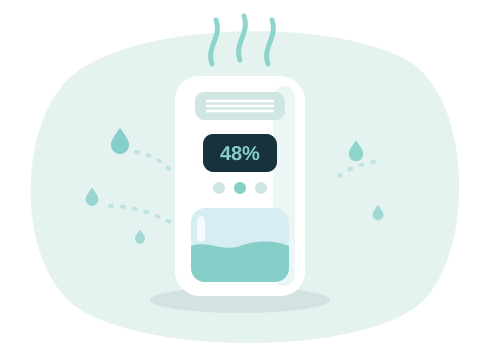
Best for most bathrooms
Run it just outside the bathroom with the door open after showers.
Compare options on Amazon (opens in a new tab)Paid link
Cheapest fix
The single most effective habit for a bathroom with poor ventilation.
Compare options on Amazon (opens in a new tab)Paid link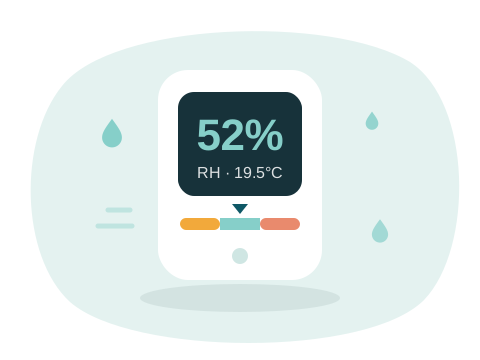
To check it’s working
How we choose: these are types of product matched to the criteria in this guide, not individually tested models. Check current specifications and reviews before you buy.
Combined with a dehumidifier or a working fan, these stop most bathroom mould before it starts:
If there’s already black mould on the sealant or ceiling, clean it with a dedicated mould remover and tackle the cause — our guide on whether dehumidifiers help with mould explains the order to do things in. For ceilings that keep coming back, anti-mould paint on Amazon (opens in a new tab) (paid link) is worth using once the surface is clean and dry.
Only if there's a suitable socket and the unit sits well away from the bath, shower and basin. UK wiring rules keep ordinary sockets out of most bathrooms, so for most homes the safe option is to run the dehumidifier just outside with the bathroom door open after a shower. Never run an extension lead into a bathroom.
Usually not, if the fan works properly and runs long enough. Test it by holding a sheet of toilet paper against the grille — it should be pulled firmly onto it. If the fan is weak, noisy or switches off the moment the light does, a dehumidifier can make up the shortfall until it's fixed or upgraded.
Squeegee the walls and screen after every shower, keep the door open afterwards, and run a dehumidifier just outside the room. If you rent, ask your landlord about installing an extractor fan — a bathroom with no ventilation at all is a common cause of damp and mould complaints.
Around 30–60 minutes is typical. If you use one with a humidity setting, leave it on until the bathroom drops back below about 60%.
Practical ways to bring room humidity down in a UK home — free habits first, then low-cost fixes, then when a dehumidifier is worth it.

How a dehumidifier helps stop mould coming back, why it won't remove existing mould, and the right order to clean, dry and prevent it in a UK home.
A plain-English guide to choosing a dehumidifier for a UK home — compressor or desiccant, the features worth paying for, and the marketing claims to ignore.